


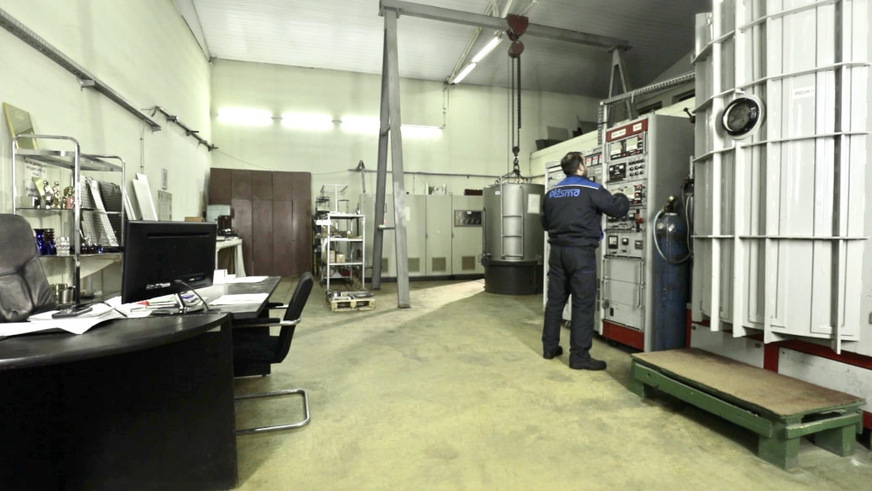
Our journey into EU-funded solar research began in the early 2000s, at the Plasma R&D Centre in Skopje, with a focus on surface engineering for solar thermal collectors. The materials were the familiar ones: aluminium, copper and several polymers. To most of these, we applied optically selective coatings using PVD (physical vapour deposition vacuum technology), depositing them directly onto three-dimensional absorbers. The absorber is the part of a collector that does the heavy lifting on heat transfer, which is why it sat at the centre of our attention from the outset.
The journey into European collaboration started with a presentation at the Solar Congress in Gleisdorf, Austria, where we set out these innovations to a room of leading EU specialists. Conversations there led to visits to our Plasma R&D Centre and, in turn, to our first EU project application under the FP7 programme, prepared with consortium partners drawn from major European institutes. When that first application was accepted, the satisfaction was considerable.
Solar Macedonia president: “Quality standards are key to growth”
In the Polysol project, our role at Plasma was to apply an optically selective coating to an entire polymer-based solar thermal collector. Matching, and ideally surpassing, the optical performance of aluminium sheets on a polymer substrate was an exacting task, and delivering it counted as a significant achievement for the company. After extensive research, structural modification of the polymer formulations and the development of multilayered coatings, we met and then exceeded the targets set. More importantly, the coating has proved durable in the long term, remaining effective after 18 years of outdoor exposure.
Results measured by DLR
In the Composol project, our brief was to develop an optically reflective coating on polymer or flexible glass substrates for concentrator collectors with a 6 m diameter reflector, designed to last and perform stably for at least 15 years. Alongside reflectivity, long-term stability under ambient conditions was a central requirement. We met it by depositing a PVD silver multilayered coating, shielded by inner and outer barrier layers to prevent oxidation and unwanted reactions with the polymer or glass substrate beneath.
These barrier layers were closely related to the barrier coatings used on newer types of PV cell, where they play a decisive role in lifting efficiency and, more critically still, in securing long-term stability. Measured by the German Aerospace Center (DLR), our results exceeded all expectations: reflectivity came in above the theoretical value for silver, the most reflective material known, and stability extended beyond 15 years. In recognition of this achievement, Plasma received a special letter of commendation for innovation.
Plasma
Subsequent projects were even more demanding. In the Dibbiopack project, focused on packaging materials for pharmaceuticals, cosmetics and food, we collaborated with leading EU institutes including the Fraunhofer Institute in Germany. Together, we achieved a reduction in permeability by more than 500 times, one of our major successes.
Six further EU R&D projects followed, among them one of my personal favourites: ENSNARE, a Nearly Zero Energy Building initiative under the Horizon 2020 programme. Our work there centred on building-integrated photovoltaic-thermal (BIPVT) and building-integrated solar thermal (BIST) systems, to which we contributed several innovative solutions.
Fraunhofer-led project scales up charging for heavy-duty transport
PVT hybrid collectors
A particular source of satisfaction has been our work on innovative PVT hybrid collectors, which generate electricity and heat simultaneously from the same collector area. One of the persistent problems in PV is the rise in cell temperature during electricity generation, especially in summer, which sharply reduces efficiency. Thanks to the cooling effect of the PVT absorber on the rear of the module, the collector delivers around three times more heat energy alongside the electricity it produces during the summer months. Our contributions to this product include several innovations:
- Thermally conductive adhesive
- Aluminium omega-shaped wings laser-welded to copper tubes, delivering the highest heat transfer coefficient
- Internal anti-corrosion coatings within the copper tubes, allowing seawater or chlorinated pool water to circulate directly through the PVT collector without heat exchangers or other costly pool automation
Tested at the SPF institute in Switzerland, our PVT collector achieves a thermal efficiency of 55.6 % (η₀, hem, no wind: 0.556) and an electrical efficiency 13 % higher than that of a standalone PV module. Its flexible design allows the PVT unit to be fitted to any PV module, while full backside coverage eliminates hot spots.
PVT-assisted renewable energy systems
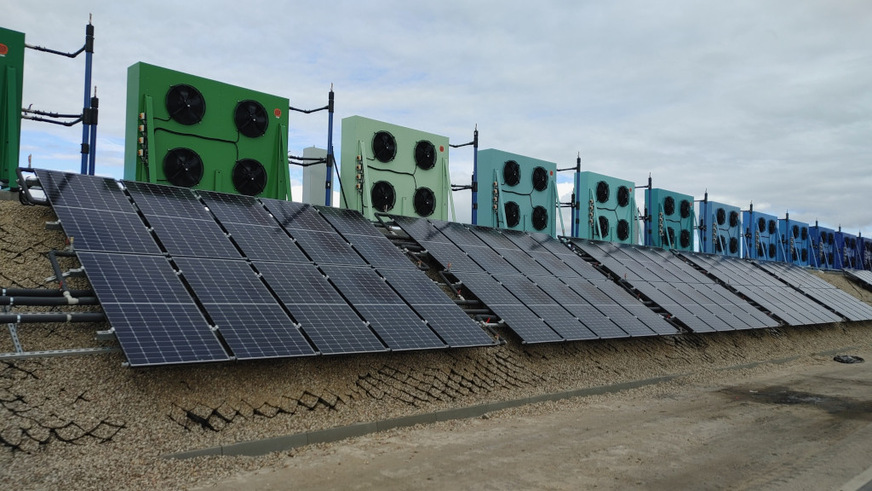
More recently, in partnership with the Polish company Calores, we have been developing PVT-assisted renewable energy systems that combine heat pumps, gas boilers and other energy sources. For these hybrid configurations, we specify the highest-efficiency PV modules to maximise both electrical and thermal output. PVT-assisted heat pumps draw on open-back PVT collectors with enlarged absorber surfaces, capturing energy from the surrounding air around the clock and, when the sun is up, from the PV cells as well. For cold-climate regions where higher thermal yields are needed, we also offer glazed PVT collectors.
Smarter E AWARD 2025: Energy transition pioneers shortlisted
Our aim is to integrate PV modules and PVT hybrid collectors as clean, CO₂-free solar energy sources, typically paired with air/water or water/water heat pumps, gas boilers or other energy sources. Most recently, in collaboration with a leading German specialist in the field, we have been developing PVT-assisted heat pumps for ice storage, enabling both cooling and heating while sharply reducing CO₂ emissions and air pollution. These hybrid systems are commercially competitive with fossil-fuel alternatives and make a meaningful contribution to global climate goals.
Plasma
The Macedonian Solar Association promotes these combined systems through trade fairs, training courses and conferences, presenting them as a fit for applications where heating and cooling dominate the energy load. A case in point is the Lidzbark Warmiński district heating system in Poland, which runs almost entirely on renewables: PV, PVT-assisted heat pumps, boreholes, PCM storage and heat storage. Our PVT collectors form part of the installation.
Germany – colour films mark a step change in PV aesthetics
Further innovative solutions are now in the pipeline, particularly in combined RES configurations. In parallel, my team is developing novel advanced materials for a range of targeted high-tech applications, among them antimicrobial surfaces and coatings, improved HVAC systems and enhanced components for energy storage and collector use. With an integrated, multidisciplinary and up-to-date approach, and drawing on the expertise we have built up over the years, we hope to contribute to a more sustainable world and the wellbeing of our planet. (Ilija Nasov/hcn)
About the author: Prof Dr Ilija Nasov holds a number of senior positions. He is Director and owner of the Center for Plasma Technologies "Plasma" Ltd in Skopje, Chairman of the Board of Camel Solar, a manufacturer of solar collectors, and Dean of the Faculty for Ecological Resources at MIT University Skopje. He is also Assistant Professor at the Ss. Cyril and Methodius National University in Skopje, working within the Solar Energy Department at the Institute of Physics, part of the Faculty of Natural Sciences. He serves additionally as President of the Solar Association of Macedonia.