



Harry Wolkenfelt, owner of the Dutch insurance advisory firm Solarif, recently installed a home battery system at his property near Rotterdam. Solarif specialises in insurance and risk management for solar energy projects and works with investors, developers and asset operators across the sector.
Batteryshelter storage from Conduct enhances fire‑safety
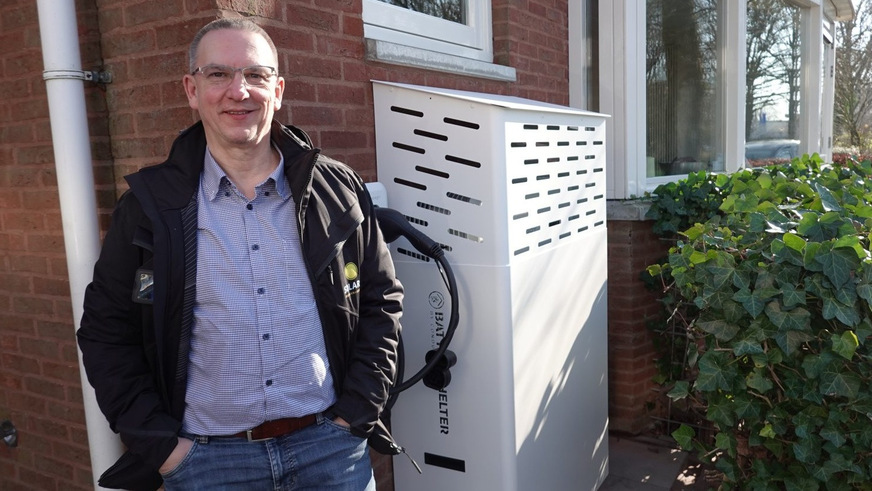
The system installed at Wolkenfelt’s home includes a Sigenergy battery placed outdoors and protected by a dedicated enclosure. According to Wolkenfelt, the placement of home battery systems can play an important role in reducing potential risks.
“My battery is installed outside. That is a very deliberate choice. By placing it externally, I literally remove the primary risk from my home,” says Wolkenfelt in an interview with Conduct, the company that developed the protective enclosure used in the installation.
Conduct
The enclosure, known as the Batteryshelter, is designed to protect the battery system from environmental exposure and external damage. At Wolkenfelt’s property, the battery installation sits beneath a mature lime tree, where falling leaves, seeds and branches can create contamination and debris around outdoor equipment.
EMC-direct – wiring systems correctly and safely
For insurers active in the solar sector, the expansion of residential storage introduces a new layer of risk assessment. While battery systems are generally considered safe when properly installed, factors such as siting, ventilation and external protection can influence the likelihood and severity of potential incidents.
The protective structure is intended to reduce such risks while also shielding the system from external damage. “With the Batteryshelter, I protect my installation against possible external damage and contamination. This not only reduces the risk of fire, but also the risk of technical disruptions,” he says.
Growing relevance for insurers and investors
For insurers, the expansion of residential storage is increasingly about risk management. As Wolkenfelt notes in his interview with Conduct, careful installation and protective measures could help reduce insurance premiums but, more importantly, reduce the risk of accidents involving battery systems in the first place. (TF)
Read the full interview with Harry Wolkenfelt here.