



How do you assess the current development of the photovoltaics and energy storage market in Spain?
Iñigo Atutxa: Spain is entering a decisive phase in the evolution of its renewable energy landscape. The country has established itself as one of Europe’s leaders in photovoltaic deployment, and we are now seeing rapid acceleration in the energy storage market as a complement to that growth. As renewable generation expands, ensuring grid stability and flexibility is becoming essential.
Genera Madrid highlights evolving business models for electrification
Do you see potential in this convergence of photovoltaics and energy storage?
Yes, the national market is increasingly mature, with public initiatives such as IDAE’s FEDER-funded programmes serving as strong catalysts for investment and innovation. At the same time, many industrial and commercial players are beginning to recognise the economic and operational value of integrating storage systems into their operations. Spain’s strength lies in its combination of renewable abundance, technological innovation and industrial capacity. Our mission is to help turn that potential into a model of sustainable growth by providing safe, efficient and locally manufactured storage solutions that enable wide-scale renewable integration and support a more resilient, decarbonised energy system.
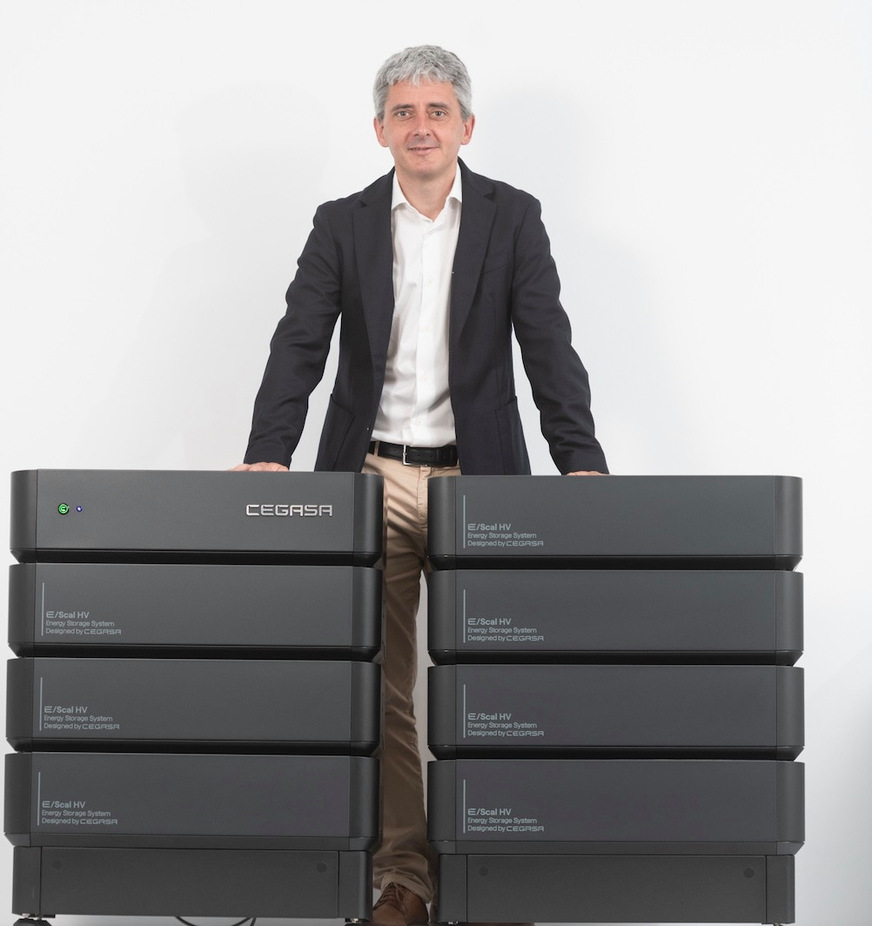
Cegasa Energía
Which segments are performing particularly well, and what types of storage applications are currently in demand?
The utility-scale and industrial segments are currently showing the strongest momentum. Large-scale storage systems, particularly those supporting grid stability and renewable integration, are in high demand as they play an essential role in balancing the intermittent nature of solar and wind power. At the same time, interest is growing in commercial and industrial (C&I) applications, where storage enables companies to optimise self-consumption, manage peak demand and participate in flexibility markets. This combination of grid services and distributed storage is clearly shaping the sector’s future.
Genera 2025 highlights surge in hybrid solar and storage
What barriers to storage do you currently see in the market?
For new PV plants, the main challenge in Spain is grid saturation caused by the large power capacity already installed and the limited storage available. This leads to negative prices during central hours of the day, which discourages investment in new plants. However, this presents an important opportunity for battery energy storage systems (BESS). For these systems, price remains the main concern, as project business cases and return-on-investment times are still relatively long. Yet, given the notable cost reductions achieved in recent years, such systems are becoming increasingly attractive to the market. We believe that combining technological innovation with local manufacturing is essential to overcome these challenges and secure a stable, reliable network.
Which markets outside Spain are of interest to Cegasa?
Our focus is on strengthening our presence across Europe. Projects such as our recent UNANOV installation in the Czech Republic demonstrate how our technology contributes to grid stability on a continental scale. We are also exploring additional markets where energy storage will play a key role in advancing energy autonomy, efficiency and resilience.
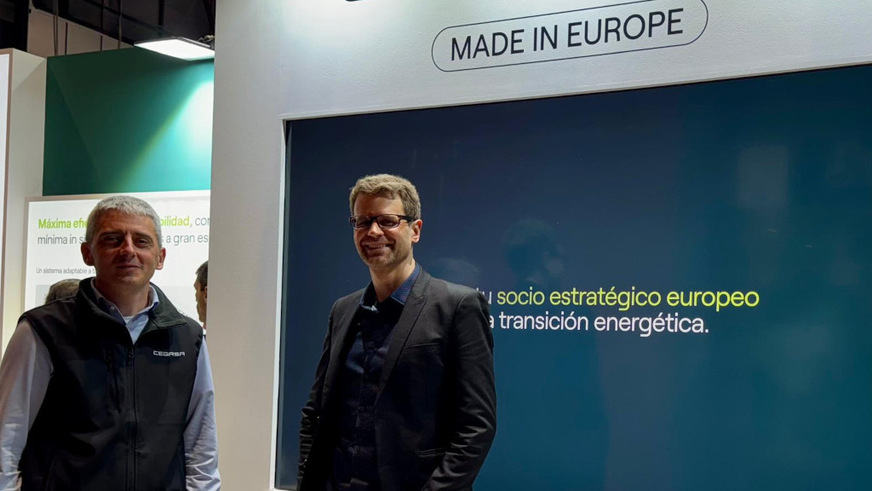
Cegasa Energía
What innovations have you been presenting at the Genera trade fair?
At Genera 2025, we will unveil new modular and scalable storage solutions designed to meet the needs of different market segments, from large-scale installations to commercial and industrial applications. Our portfolio features products for C&I, such as the E/Xpand Box and E/Strem Box, and for the utility segment, the E/Strem SKD, as well as the E/Xpand CNT and E/Strem CNT, which serve both application areas. These innovations reflect our commitment to efficiency, safety and sustainability, combining advanced lithium technology with a design philosophy centred on flexibility, easy integration and reduced environmental impact throughout the product lifecycle.
Which trends are currently driving the development of storage systems?
We are seeing a clear shift towards flexibility, modularity and sustainability across the entire value chain. Energy storage systems are now regarded as active assets that provide multiple grid services and optimise renewable generation, rather than mere backup units.
What are your expectations for the coming year, and what goals have you set for the company?
Our 2026 outlook marks a pivotal moment in consolidating Cegasa Energía as a leading European player in energy storage. A major milestone will be the inauguration of our new 3,000 m² production facility in Vitoria-Gasteiz, bringing our total operational area to 10,000 m². This expansion will increase our production capacity to 1,800 MWh per year, enabling us to meet growing demand in the European BESS market while reinforcing our industrial leadership. On the employment side, we plan to double our workforce within three years, from 110 to more than 200 employees, ensuring steady and sustainable growth. (nhp, Madrid)