



Module prices continued to diverge between standard and premium products in September 2026, according to the latest PV Index from online trading platform sun.store. All four module segments eased over the month. Full Black dipped by just 1 percent, matching TOPCon bifacial, and overtook Back Contact as the most expensive segment in the index. Back Contact slipped for a second month running, falling by 4 percent.
- Full Black: €0.129/W (-1% m/m)
- Back Contact: €0.128/W (-4% m/m)
- TOPCon monofacial: €0.120/W (-2% m/m)
- TOPCon bifacial: €0.114/W (-1% m/m)
The gap between the two TOPCon variants narrowed slightly in September, but bifacial modules remain the cheaper option for standard utility-scale projects.
Best-selling solar module brands
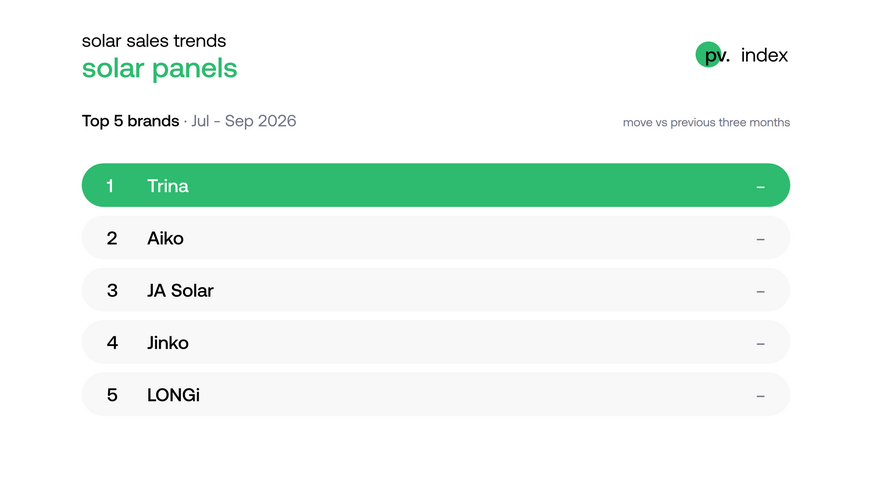
Ranked by capacity sold on sun.store over the three months to September 2026, the top five module brands were:
sun.store
Trina held the top position. A three-month view smooths out the effect of individual large orders, so the ranking shows which suppliers are moving consistent volume through the marketplace.
Inverter prices in September 2026
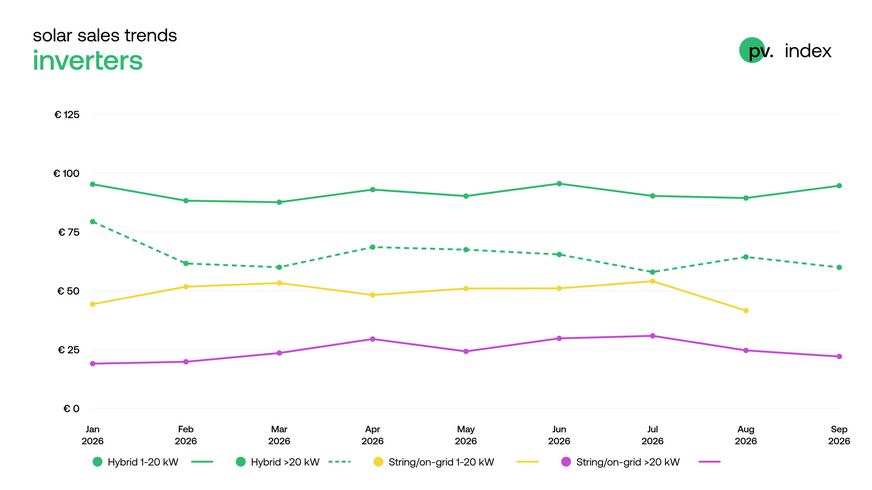
- Hybrid 1-20 kW €94.66/kW ▲ +5.8% m/m
- Hybrid >20 kW €59.93/kW ▼ -6.9% m/m
- String/on-grid >20 kW €22.03/kW ▼ -10.5% m/m
Hybrid inverter prices moved in opposite directions across the two size bands. Larger commercial units remain by some distance the most competitively priced part of the inverter market on a per-kW basis.
sun.store
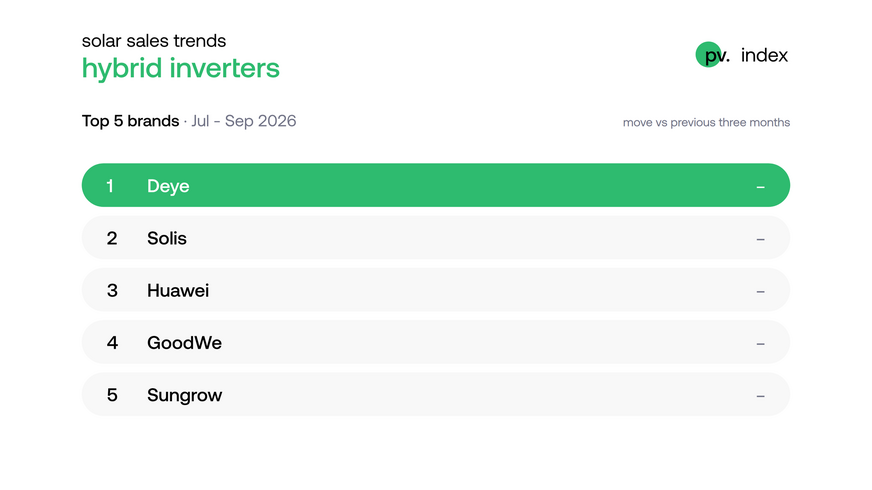
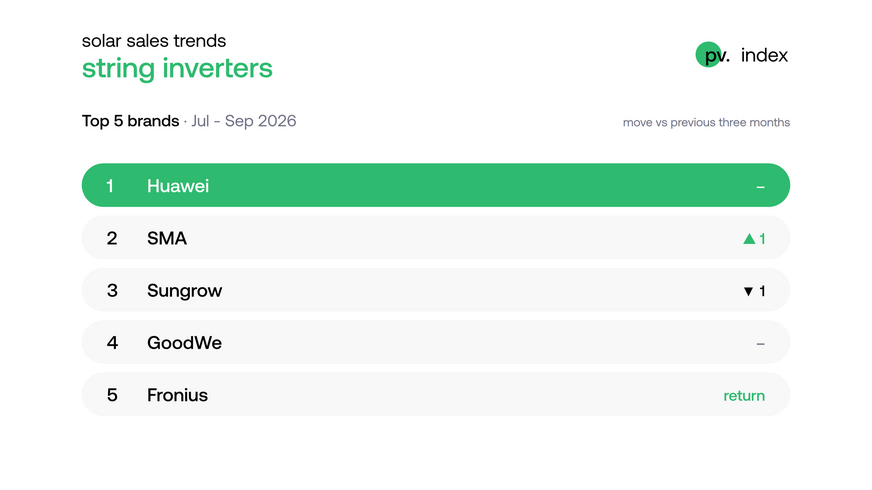
The easing in the string and on-grid series above 20 kW mostly reflects a change in the mix of models traded, not a price cut on any single product. In August, the mix leaned more heavily towards premium three-phase inverters, including models from Huawei, Kostal and Sungrow.
August PV Index: premium modules hold ground as demand cools
In September, the mix shifted towards cheaper, larger commercial models from brands such as GoodWe and Sofar. That pulls the index figure down, even though the prices of individual models have changed little.
sun.store
sun.store
PV PMI: European solar demand outlook
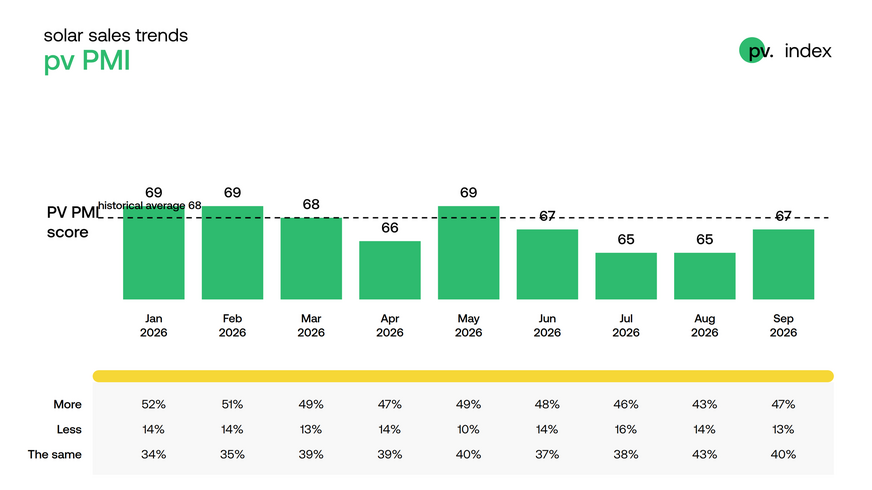
sun.store’s PV purchasing managers’ index (PMI) came in at 67 in September 2026, up from 65 in August. That puts it just below its historical average of 68, pointing to steady demand.
sun.store
The index has run in a narrow band around 68 since the series began, and that level, marked on the chart, is the reference point for any single reading. By that measure, September was a steady month, not a strong one.
- 47 percent plan to buy more
- 40 percent expect no change
- 13 percent plan to buy less
Solar price trends Europe 2026: key takeaways
- Full Black is now the most expensive module segment, narrowly ahead of Back Contact
- Bifacial TOPCon is still cheaper than monofacial, although the gap narrowed slightly in September
- Trina leads the module brand table on a three-month view, so the ranking reflects sustained volume rather than one large order
- The index for string and on-grid inverters above 20 kW fell by 10.5 percent, mainly because of a shift towards cheaper commercial models. Hybrid inverter prices moved in opposite directions across the two size bands
- The PMI rose to 67 from 65, just below its historical average of 68 (hcn)