



TOPCon bifacial posted the month's strongest gain, and Back Contact overtook the field to become the index's most expensive segment, even as Full Black continued its slide.
- Back Contact: €0.133/Wp (-1% m/m)
- Full Black: €0.130/Wp (-6% m/m)
- TOPCon monofacial: €0.122/Wp (-5% m/m)
- TOPCon bifacial: €0.116/Wp (+6% m/m)
The two TOPCon variants remained distinct price points this month, though the gap is narrowing, with bifacial still the cheaper route for standard utility-scale modules.
JA’s Alastair Mounsey: “Europe pushes us technologically”
Module brand rankings
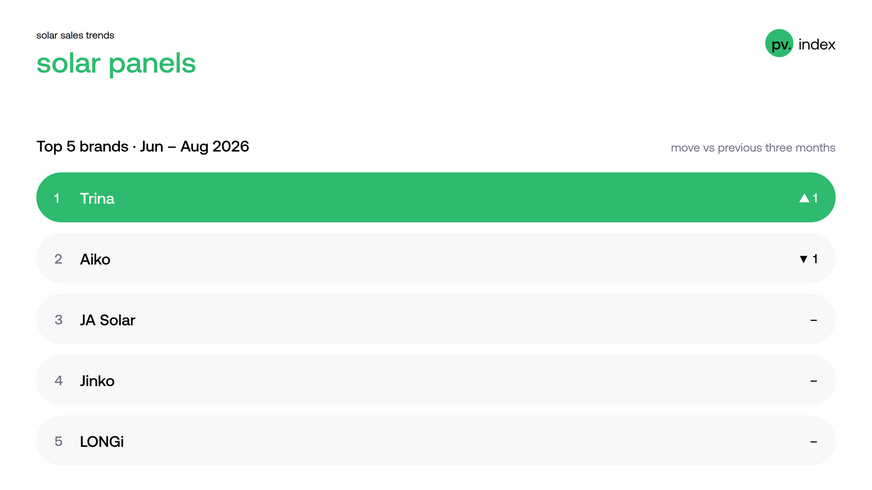
Ranked by capacity sold over the three months to August 2026, the top five module brands were:
sun.store
Trina took the top position. Reading the table over a quarter rather than a single month strips out the effect of individual large orders, so what remains reflects which suppliers are actually moving serious volume through the marketplace.
Inverters
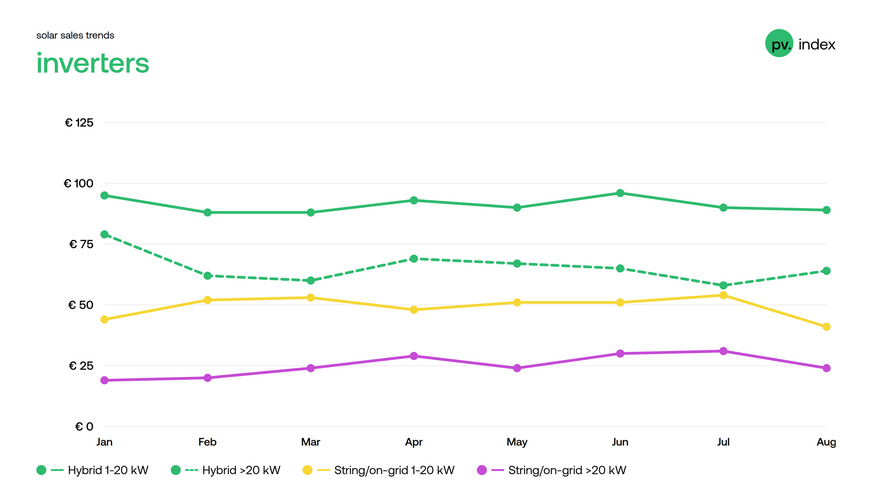
Hybrid pricing moved in different directions across the two size bands this month. Larger commercial units remain by some distance the most competitively priced part of the inverter market on a per-kW basis.
sun.store
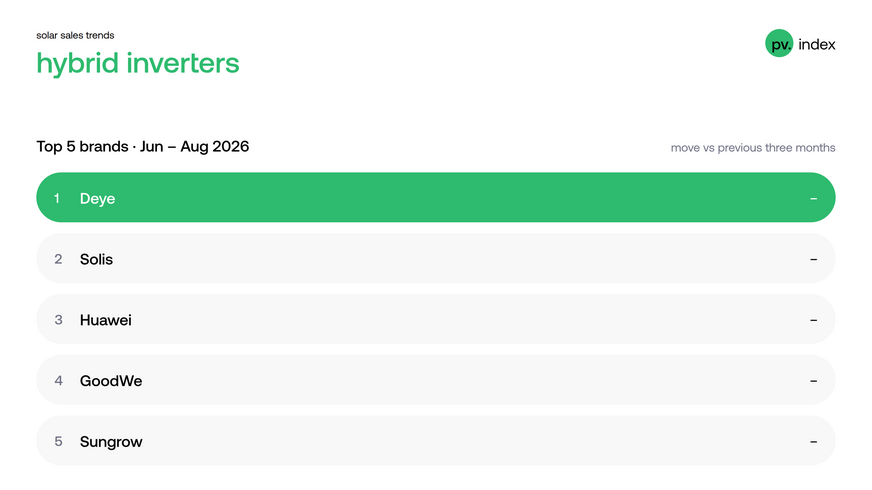
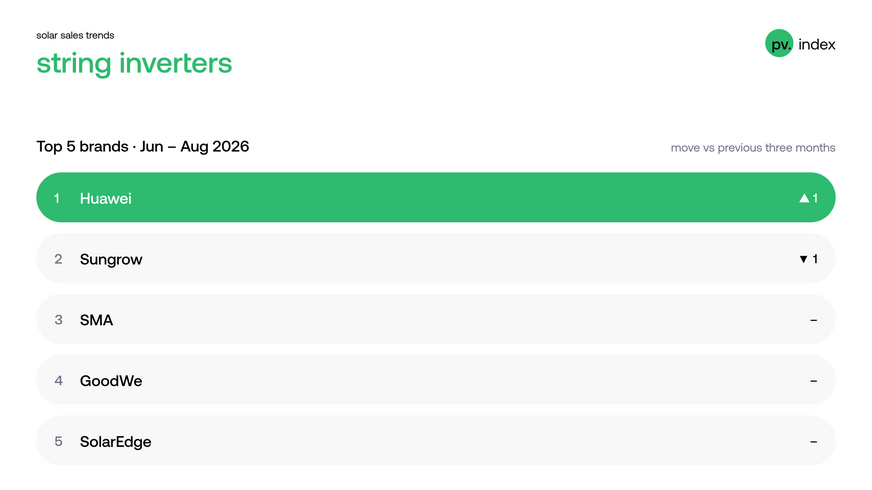
The easing in the string and on-grid series is mostly a shift in the mix of models trading, rather than a cut to any single product. The month before carried a heavier weighting of premium three-phase inverters, SMA and Fronius among them, which sit at the higher end of the market. This month leaned toward more competitively priced and larger commercial-scale models, including GoodWe, Solis and SolarEdge, which sit lower in the range. As the blend tilts that way, the published figure eases, even where the standing of individual models has changed little.
Hybrid inverters
sun.store
Pascal de Boer: "The most interesting driver is cybersecurity itself"
String and on-grid inverters
sun.store
Sungrow's Andrea Polini: "Bankability counts more than price"
PV PMI
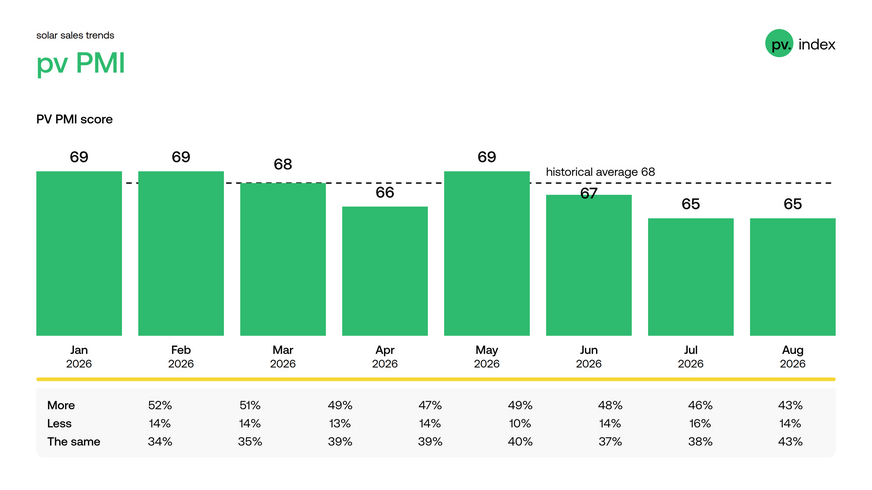
The PV PMI came in at 65 in August 2026, unchanged from a month earlier. That is below its historical average, pointing to noticeably softer buying intentions.
sun.store
The index has run in a narrow band around 68 since the series began, and that level, marked on the chart, is the reference point for any single reading. On that basis, August 2026 sits at the softer end of the range rather than marking a strong month.
- 43% plan to buy more
- 43% expect no change
- 14% plan to buy less
What to expect
- Back Contact is now the most expensive module segment in the index, priced above standard
- TOPCon TOPCon bifacial and monofacial are priced apart, which matters for anyone specifying on price alone
- Trina leads the module brand table on a three-month view, so the shift reflects sustained volume rather than one large order
- String and on-grid inverter pricing moved sharply lower this month, while hybrid pricing held far steadier
- PMI at 65 sits below its historical average of 68, so buying intentions are softer than the headline level suggests
Inverters open a new front in Europe's energy sovereignty
Premium modules are still setting the pace, but the demand signal has cooled since the spring. Buyers holding out for lower standard-module pricing are being rewarded; those specifying premium categories are not. (hcn)