



Rivan Industries, a synthetic fuels hardware manufacturer, has deployed its first commercial-scale 1 MW synthetic natural gas (SNG) system at its UK facility. Powered entirely by an integrated solar array and operating fully off-grid, the company says it is the first autonomous solar-driven SNG system of its kind. Once commissioning is complete, the plant is expected to produce carbon-neutral SNG at a cost 80 percent lower than historical benchmarks.
The 1 MW deployment marks a major milestone for Rivan, which began operations just over two years ago. Having validated autonomous solar-powered operation, the company is preparing its first large-scale production run, aiming to build a further 10 systems for deployment at its second facility in 2027. Rivan's ambition is to bring up to 1 TWh of SNG online within the next three years.
Increase the rate of expansion for renewables in Europe by a factor 5
Synthetic fuels have a key role to play in the energy transition. Heavy industries such as cement, steel, chemicals and aviation cannot be fully electrified, since their processes require molecules and high energy density.Alternatives such as hydrogen remain too expensive, lack scale or require vast infrastructure change. Solar-powered synthetic natural gas offers perhaps the only viable technology, acting as a scalable, drop-in and carbon-neutral replacement.
Rivan's approach is built on three engineering pillars:
- Vertical integration of solar power and conversion hardware into a single product to reduce cost and increase performance
- Smaller 1 MW modular systems operating autonomously on direct solar input, increasing iteration speed and cutting cost
- In-house manufacturing to drive feedback loops that improve speed and reduce cost
The systems are deliberately designed for an era of cheap solar and decentralised, off-grid energy. The 1 MW milestone sets Rivan up for mass manufacturing of its modular units, which can be deployed as large-scale solar-SNG constellations in a similar way to utility-scale solar and battery projects. The core sub-systems, an electrolyser, reactor, power management and control, CO2 supply and balance-of-plant, are all vertically integrated into a 1 MW solar array. The system draws electricity directly from the panels, produces H2 and CO2, and combines them to make carbon-neutral synthetic natural gas, with no grid connection required at any stage.
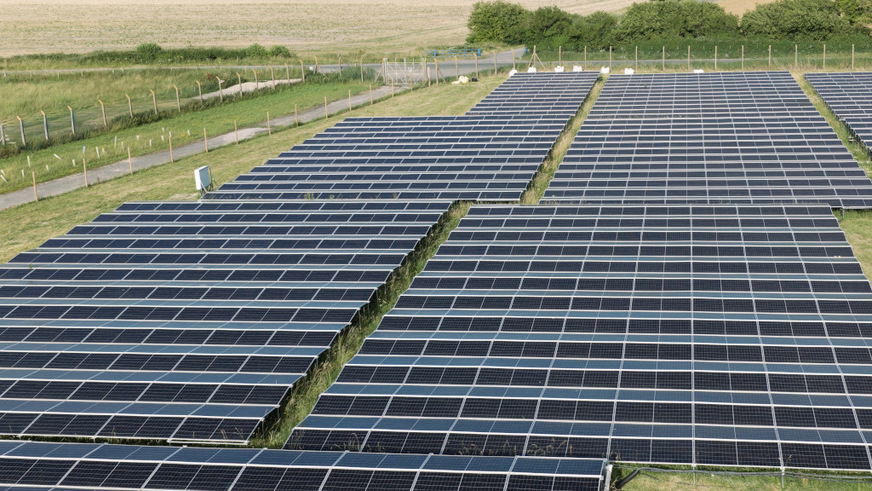
Rivan
To access the cheapest possible solar power, Rivan designed its own direct current architecture beyond the solar array, capable of outputting DC electricity at under £10/MWh. This was achieved by removing 60 percent of the peripheral hardware required for grid connection or integration with process equipment. Against industry benchmarks for SNG plants, Rivan's hardware is overall 11 times lower in cost.
North Macedonia charts a course for European hydrogen integration
The development builds on the company's 100 kW reactor pilot 10 months ago, which achieved one of the key technical challenges for its systems: GSMR-spec conversion at 99.7 percent purity. This proved that Rivan's solar-derived synthetic natural gas can be injected directly into the grid, a step the company is targeting in the coming months. Harvey Hodd, founder and CEO: "This is a huge milestone for us. With the deployment of our 1 MW system, we're on a clear path to achieving costs for SNG that were previously considered impossible. Now that we've proven our commercial-scale, fully solar-powered system, our focus is on deployment. Our new 50,000 sqft manufacturing facility will help us ramp up production as we target mass manufacturing." (hcn)