



The gap between premium and standard modules widened again in October. Full Black modules rose more than any other segment and are now the most expensive in the index.
- Full Black: €0.144/Wp (+13% m/m)
- Back Contact: €0.131/Wp (+4% m/m)
- TOPCon monofacial: €0.131/Wp (+9% m/m)
- TOPCon bifacial: €0.116/Wp (+1% m/m) The gap between the two TOPCon variants widened this month, leaving bifacial modules the cheaper option for standard utility-scale projects.
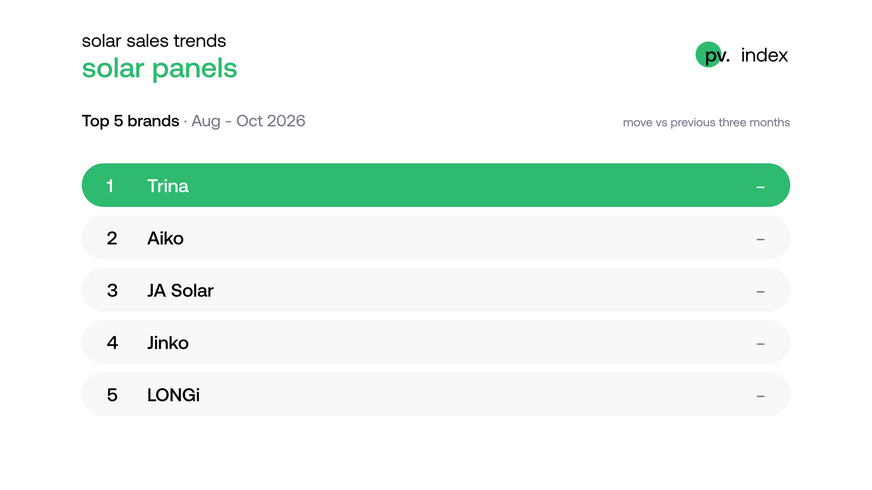
Best-selling solar module brands
sun.store
Trina held the top position. Looking at a whole quarter instead of a single month evens out the effect of individual large orders, so the ranking gives a fair picture of which suppliers are moving serious volume through the marketplace.
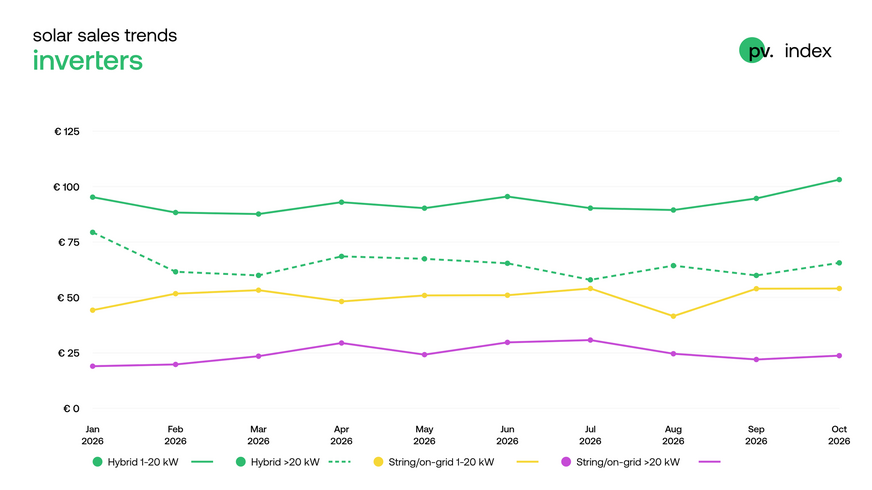
Inverter prices in October 2026
- Hybrid 1-20 kW €103.16/kW ▲ +9.0% m/m
- Hybrid >20 kW €65.63/kW ▲ +9.5% m/m
- String/on-grid 1-20 kW €54.05/kW ▲ +0.2% m/m
- String/on-grid >20 kW €23.76/kW ▲ +7.9% m/m
sun.store
Hybrid inverter prices edged up in both size bands. Per kW, larger commercial units are still by far the cheapest part of the inverter market.
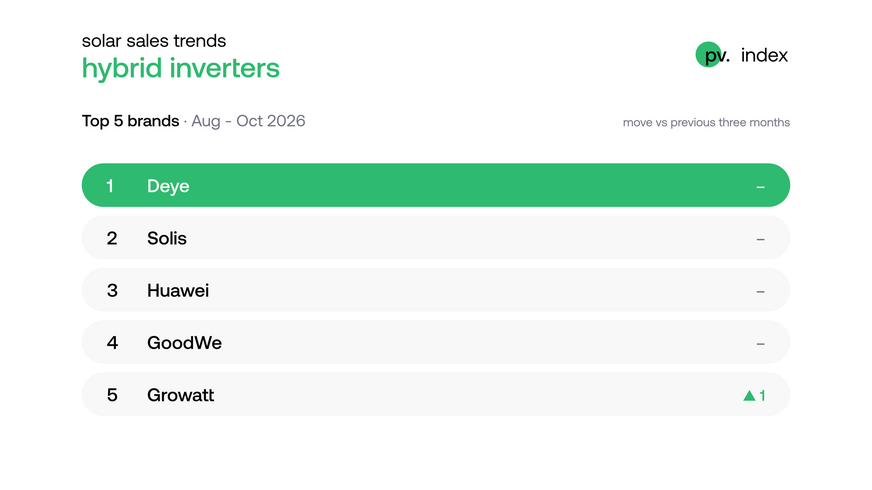
Best-selling hybrid inverters
sun.store
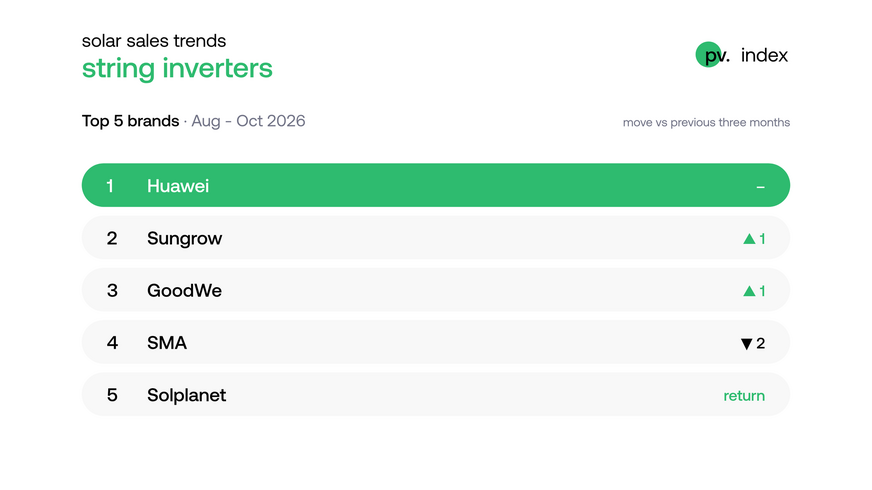
Best-selling string and on-grid inverters
sun.store
PV PMI: European solar demand outlook
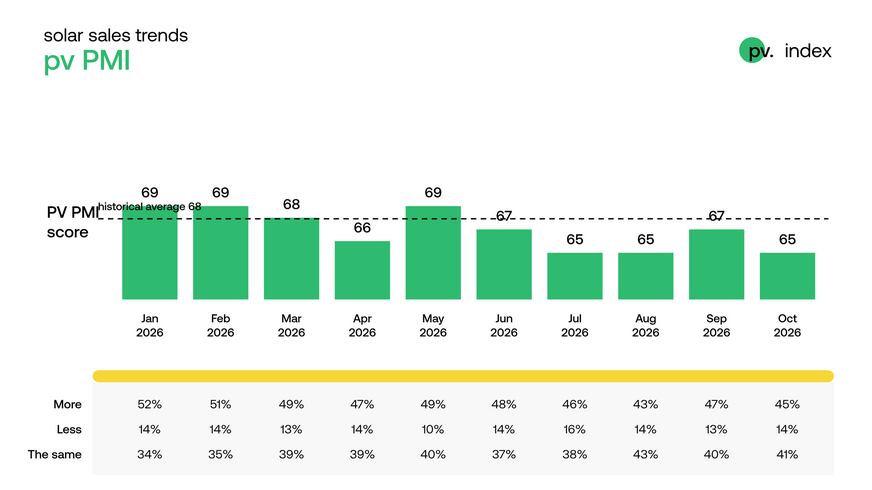
The PV PMI, sun.store’s purchasing managers’ index for the solar market, came in at 65 in October, down from 67 in September. That puts it slightly below its historical average, which points to demand a little softer than usual.
sun.store
Since the series began, the index has moved within a narrow band around 68, which is marked on the chart as the reference point for each month’s reading. Measured against that, October sits at the weaker end of the range.
- 45% plan to buy more
- 41% expect no change
- 14% plan to buy less
September PV Index: module prices ease as demand edges up
Solar price trends Europe 2026: key takeaways
- Full Black is the most expensive module segment in the index, priced above standard TOPCon
- TOPCon bifacial and monofacial are priced apart, which matters for anyone choosing on price alone
- Trina leads the module brand table over three months, so the ranking reflects steady volume, not a single large order
- Hybrid inverter prices edged up in both size bands, while string and on-grid prices moved within a narrower range
- The PV PMI fell to 65 from 67, just below its historical average of 68 (hcn)
Module prices rose in every segment in October, with premium modules pulling furthest ahead. At the same time, the PV PMI slipped to 65, so buyers remain a little more cautious than usual. (hcn)
- Frequently asked questions
How much do solar panels cost in Europe in October 2026?
On the sun.store marketplace in October 2026, prices were €0.116/Wp for TOPCon bifacial modules, €0.131/Wp for TOPCon monofacial and Back Contact, and €0.144/Wp for Full Black, excluding VAT and delivery. All four module segments rose compared with September.
Are solar module prices going up or down?
Up. In October 2026, all four PV Index module segments rose month on month: TOPCon bifacial by 1.5 percent, Back Contact by 3.9 percent, TOPCon monofacial by 9.2 percent and Full Black by 13.3 percent.
Which is cheaper, TOPCon bifacial or TOPCon monofacial?
TOPCon bifacial. In October 2026 it averaged €0.116/Wp against €0.131/Wp for TOPCon monofacial.
What do solar inverters cost in Europe in October 2026?
On sun.store in October 2026, hybrid inverters cost €103.16/kW for 1–20 kW (+9.0%) and €65.63/kW above 20 kW (+9.5%). String and on-grid inverters cost €54.05/kW for 1–20 kW (+0.2%) and €23.76/kW above 20 kW (+7.9%). Prices are per kW of AC power, excluding VAT and delivery.
Which solar module brands sell the most in Europe?
Ranked by capacity sold on sun.store over August to October 2026, the Top 5 module brands were Trina, Aiko, JA Solar, Jinko and LONGi. Trina held first place, with the Top 5 unchanged.
Which inverter brands sell the most in Europe?
Ranked by capacity sold on sun.store over August to October 2026, the top five were, for hybrid inverters: Deye, Solis, Huawei, GoodWe and Growatt; for string and on-grid inverters: Huawei, Sungrow, GoodWe, SMA and Solplanet.
What is the PV PMI and what was it in October 2026?
The PV PMI is sun.store's monthly solar demand indicator, built from buyers' answers on whether they plan to buy more, the same or less PV equipment next month. In October 2026 it fell to 65 from 67, just below its historical average of 68. 45% plan to buy more, 41% expect no change and 14% plan to buy less.
What is the sun.store PV Index?
The PV Index is a monthly price benchmark for solar modules and inverters in Europe, compiled from transactions settled on the sun.store marketplace. Prices are net of VAT, exclude delivery and are weighted by the capacity traded.
The figures in this report are based on transactions settled on the sun.store marketplace during October 2026. (hcn)