



The mood at Intersolar Europe 2026 is undeniably one of momentum. The doors have opened, the halls are already packed and the atmosphere is optimistic. Set apart from the buzzing booths, the Fraunhofer Institute for Solar Energy Systems ISE has chosen this week to release a study that puts the underlying challenge in precise terms: Germany's energy transition is technically feasible and economically rational – and the lessons drawn from one of Europe's most complex energy systems are broadly applicable. The window for timely action, however, is narrowing.
Intersolar Europe 2026: C&I moves from installation to integration
Using the REMod energy system model, Fraunhofer ISE finds that a fully renewable energy system can maintain reliable supply even through extended periods of cold, dark and windless weather – provided the right combination of seasonal storage, backup capacity based on climate-neutral gases, load flexibility and European grid interconnection is in place. The prerequisite is substantial: around 300 GW of wind and 470 GW of solar by 2045, alongside hydrogen infrastructure and grid digitisation. Security of supply holds even if electricity demand triples to 1,600 TWh.
The economics supports the transition
Cumulative investment of approximately €8.6 trillion between 2025 and 2045 corresponds to an annual GDP share of seven to ten percent. The resulting CO₂ avoidance costs of around €210 per tonne are well below the German Federal Environment Agency's climate impact cost estimates of €300 to €880 per tonne. After 2045, falling energy prices and reduced import costs offset the initial additional outlay.
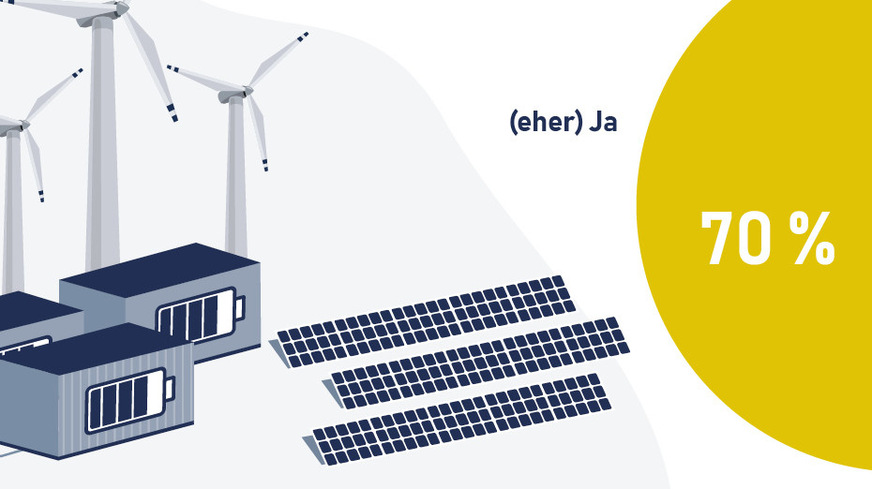
BSW-Solar
The study is more cautious on the political dimension. A remaining emissions gap of 212 million tonnes of CO₂-equivalent relative to Germany's statutory 2045 targets points to a clear policy shortfall. The Fraunhofer researchers conclude directly: climate neutrality is no longer a question of technical or economic feasibility, but of political will, corporate decision-making and readiness for systemic change.
Storage shows the gap
Germany added more than 2 GWh of new battery storage capacity in the first quarter of 2026 alone, with large-scale additions up 290% year on year. Yet according to consultancy Enervis, only around 15 GWh of additional large-scale capacity can be considered reasonably secured by 2029, against a pipeline of some 58 GWh facing material uncertainty. German Solar Industry Association BSW-Solar has used Intersolar week to call for faster grid connection procedures and reduced regulatory friction, arguing that the investment is ready but the framework is not.
Markus Elsässer: "The solutions are ready"
"Many investments are ready," says BSW-Solar chief executive Carsten Körnig. "But grid connection procedures that take too long and regulatory uncertainty are slowing expansion. Policy needs to act urgently here." (TF)