



The two fairs form the core of the International Electrification and Decarbonisation Week, which runs from 24 to 26 November 2026 at the Institución Ferial de Madrid (Ifema) exhibition centre. A quarter of the exhibitors have come from abroad, including companies from Germany, France, Italy, the Netherlands, Portugal and Turkey.
Niels H. Petersen
Genera covers renewable energy, storage, hydrogen and energy efficiency, while Matelec deals with the infrastructure and technology needed to electrify industry, buildings, transport and cities. Together, the two fairs cover generation and consumption in one place. The organisers have lined up more than 120 workshops, presentations and panel discussions on grid flexibility, storage safety, photovoltaics, self-consumption and digitalisation, and an innovation gallery presents 16 projects.
Huawei across four segments
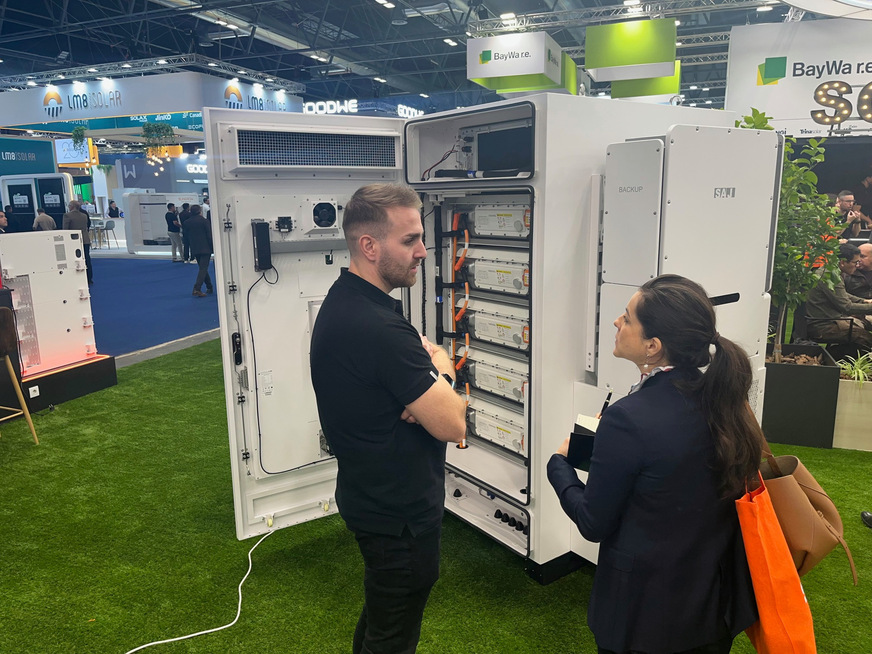
Huawei Digital Power has the largest stand at the fair, covering 466 m², which the company says is more space than it has taken at any previous trade fair. New products are on display across four segments: residential, commercial and industrial (C&I), large-scale solar and EV charging infrastructure. The company’s strategic partners Green Power and Wattkraft are also exhibiting on the stand.
Spain – solar's success becomes its economic challenge
For residential applications, Huawei is presenting the Luterra S2-XL and Luterra S2-XM home storage systems, both launched this year, which the company says are easier to install and use artificial intelligence to optimise self-consumption. For large-scale solar plants, the company is showing systems based on grid-forming technology. Grid-forming inverters can set a stable frequency and voltage on their own, without an existing grid as a reference, a capability that matters more and more as solar plants are expected to help stabilise the grid.
More value from every kilowatt hour
Niels H. Petersen
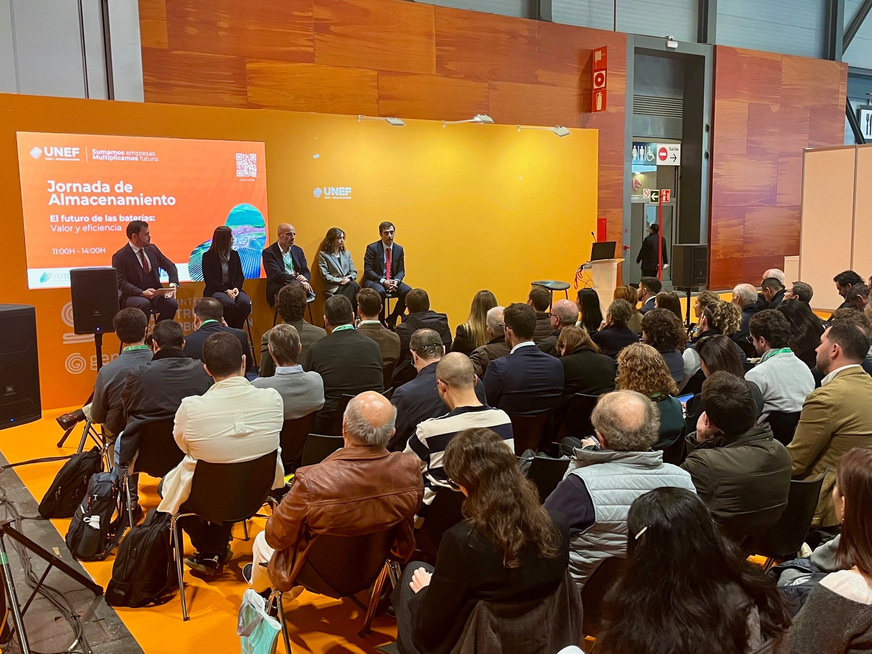
Storage also features prominently in the conference programme. The Spanish photovoltaic association Unión Española Fotovoltaica (UNEF) hosted its own event on battery storage and asset management, meaning the commercial and technical operation of plants. Opening the session, UNEF director general José Donoso said: “It is no longer enough to generate and sell electricity. Now, more than ever, it is essential to extract the maximum value from every kilowatt hour produced.”
UNEF overhauls its quality seal for PV installers
Mario Baz, chief sales manager at Enerland, made the case that battery storage has become a business in its own right. “A year ago at this forum, I was talking about what might be possible. Today we are talking about a reality,” he said. His company is already building and signing contracts for more than 1 GWh of battery capacity, mainly in Portugal, Spain and Italy.
Operating strategy is decisive
Whether a storage system pays off, however, depends heavily on how it is operated. Carla Pregel, head of strategy and business development at Entrix, made the point with figures from the UK, which already has more storage connected to the grid, and where revenues of the best and worst operators differ by up to 70 percent. The lesson for investors is that skimping on operational management can quickly prove expensive.
BM2Solar managing director Susana Quintana Plaza and sales director Manuel Moliner put a figure on the stakes with a simulation of a 10 MW solar plant paired with a 10 MW/40 MWh battery controlled by artificial intelligence. If the battery trades in real time across all markets and reassesses every 15 minutes when to discharge, revenues can be quadrupled, says the company. Closing the session, Borja Dalmau, head of storage at UNEF, said that project developers, manufacturers, investors, financiers and asset managers need to work together from the earliest planning stages if results like these are to be achieved.
New home storage from Solis
Niels H. Petersen
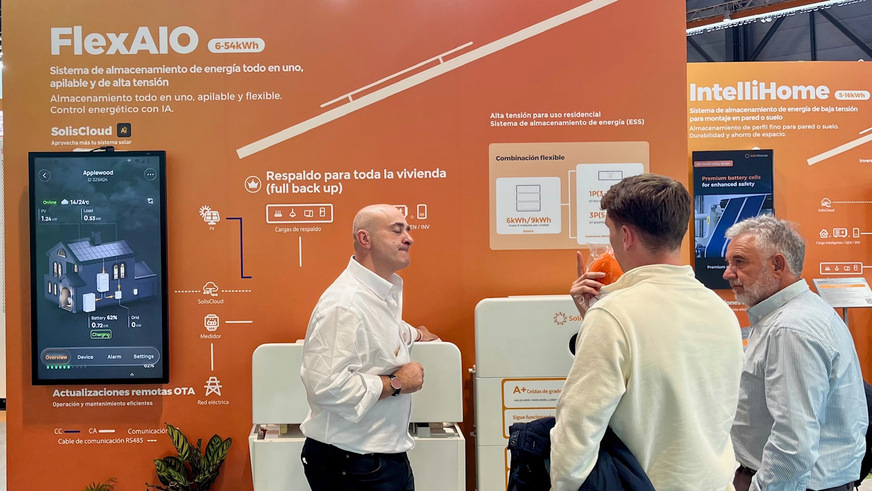
Inverter manufacturer Solis brought the discussion down to household level, presenting its new Flexaio home storage system in a dedicated session on the first day of the fair. The system combines single-phase inverters of 3–10 kW or three-phase units of 5–20 kW with stackable battery modules offering 6–54 kWh of storage. According to Solis, five layers of hardware protection and dedicated management for each battery module keep the system safe, and the enclosure is rated IP66, making it dust-tight and protected against powerful water jets. If the grid fails, a separate backup connection continues to supply selected circuits in the home.
Spain – solar revenues fall two-thirds as prices go negative
The Solisai software manages charging and discharging, taking solar forecasts, household consumption patterns and electricity tariffs into account. In effect, Solis is applying on a small scale what the UNEF forum discussed for large-scale storage. For the commercial and industrial segment, the company is showing the Evercore storage system with a 15-stage safety concept, the Flexcore-OD and Flexcore-ID variants and hybrid inverters rated at 60 kW and 125 kW.
Nextpower: trackers made from recycled steel
US company Nextpower is presenting its technology for utility-scale solar plants, including trackers, foundations and modular power conversion systems, with two trackers as the highlights. The NX Gemini mounts two modules one above the other in portrait orientation, which the company says generates more electricity, makes better use of the available land and simplifies installation. The NX Horizon Low Carbon carries a single module in portrait orientation and is made from recycled steel to cut the carbon footprint of large projects, without compromising reliability, according to the manufacturer.
Castile and León plans per-hectare tax on solar parks
The line-up also includes fixed-tilt systems and other mounting technology from subsidiary Zimmermann. “The European solar market is becoming increasingly demanding,” says Yves Figuerola, senior vice president supply chain management and general manager Europe at Nextpower. At Genera, the company is showing how it has extended its integrated platform with further products and services to meet those demands.
Conclusion: from generators to energy managers
Holding Genera and Matelec together reflects where the industry is heading. As electrification gathers pace, PV is increasingly planned as one piece of a bigger system, together with storage, grids and charging infrastructure. In Madrid, speaker after speaker came back to the point José Donoso made when he opened the UNEF forum, that generating and selling electricity is not enough on its own. Their shared conclusion was that plants planned early, with all stakeholders on board and intelligent control in place, get more out of the same hardware. (nhp)