



1. Conduct advanced site surveys
Site surveys are critical to installation success. Beyond measuring dimensions, focus on analysing roof conditions for hidden defects, such as micro-cracks in tiles or weak structural elements, and use drones or 3D mapping tools for a precise assessment. Dealing with potential issues upfront saves time on redesigns and on-the-spot problem-solving.
2. Optimise ground-level preparation
Pre-sorting components by installation phase and labelling them by function can reduce assembly time on the roof. Organising components in this way gives installers immediate access to the tools and materials they need for each step, which cuts down on confusion and interruptions. It also streamlines the workflow and helps prevent important parts from being misplaced or lost.
3. Invest in safe and efficient roof mobility
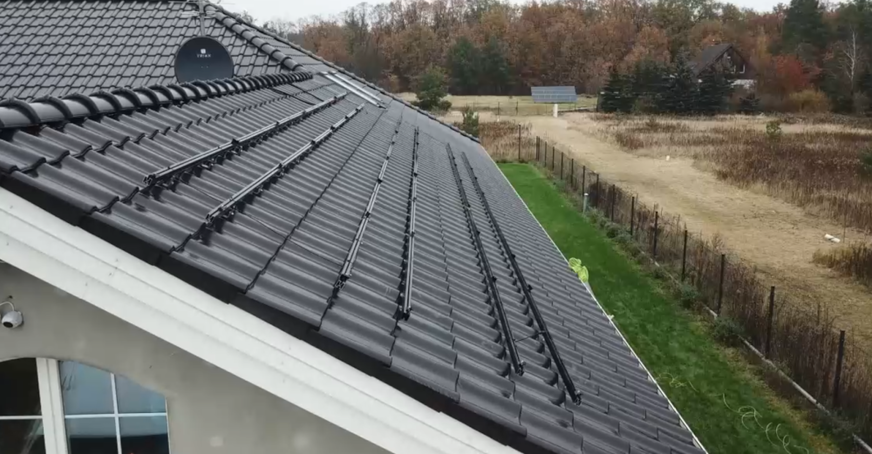
Avoid improvising, for example by walking directly on roof tiles or rails, as this risks damage and delays. Use dedicated roofing ladders or scaffolding instead, so installers can move around more easily and with less risk of accidents. Some advanced rail systems, such as reinforced models, can safely take point loads, which means installers can step on them where needed without damaging the roof.
4. Minimise tool dependence
Choose PV systems that are designed to be quick to assemble. Modular mounting systems that need only basic tools or socket adjustments, for example, can speed up installation considerably. The fewer tools installers need, the smoother and faster the job goes.
Photonica
5. Maintain a strategic component reserve
Even with precise planning, unexpected issues such as defective parts or overlooked components can come up. Keeping a surplus of key materials, such as connectors or cables, helps projects stay on schedule without delays from emergency orders.
• Keep a surplus of 7–10 percent of critical components
• Track inventory in real time
• Develop rapid procurement protocols for specialised parts
More about installation on pv Europe
6. Implement robust cable management practices
Cable errors are among the most frequent causes of commissioning delays. Colour-coded and labelled cables help prevent wrong connections and speed up system testing, which is particularly important in complex installations with multiple strings and inverters.
7. Maintain a systematic worksite
A disorganised work environment can lead to mistakes and even accidents, so clear away debris regularly and route cables neatly. Research indicates that organised worksites can improve installation efficiency.
8. Leverage tailored mounting systems
Mounting systems designed for quick assembly can make a big difference. The Photonica FLEX system for pitched roofs, for instance, needs fewer components and allows hooks to be spaced up to 2 m apart without losing durability. Its TwistLock mechanism makes assembly simpler, and integrated cable holders keep wiring tidy, all of which helps to complete projects faster.
Learn more in our webinar: Mastering C&I rooftop design - from complex geometry to seamless installation
9. Adopt prefabricated electrical solutions
Prefabricated electrical switchgear saves the time spent building custom units on site. Although it costs slightly more upfront, it speeds up installation and reduces errors, which makes it pay off on large-scale projects. Taken together, these steps can help PV installers work faster and more reliably as demand for solar keeps rising. (Mariusz Bałachowski/hcn)
See also: Fires in PV systems – Risk assessment and safety solutions