



Middle East tensions are working their way back into European energy markets, just not evenly. Renewed conflict in the region disrupted shipping and tightened global gas supplies in July, pushing prices to fresh highs. Against this backdrop, long-term clean power contracts barely moved, even as battery storage revenues climbed sharply in the same period.
IEA: Middle East crisis driving investment in electrification
Before the conflict, around a fifth of the world's LNG trade passed through the Strait of Hormuz, now disrupted by the fighting. European gas prices surged as a result: the benchmark Dutch winter contract reached 60.8 EUR/MWh, a three-year high, and next year's contract peaked at 45.6 EUR/MWh in late July, around 10 percent above its average for the previous quarter.
pexapark
Power prices have followed the same path, given how closely the two are linked in several European markets. German futures for 2027 rose 20 percent in July alone, breaching 100 EUR/MWh for the first time in months and peaking above 111 EUR/MWh late in the month. The rally has also sharpened concerns about winter supply: EU gas storage stood at only around 56 percent full at the end of July, roughly 15 percentage points below its usual seasonal level despite continued refilling.
PPAs tell a different story
Long-term power purchase agreements – the contracts companies sign to lock in clean electricity for years ahead – have been telling a different story. In Germany, one-year solar contracts rose sharply in July, up more than 15 percent, but ten-year contracts increased by under 4 percent. The gap was narrower still in markets less reliant on gas, such as France and Spain. Long-term buyers are pricing in something the market has learned the hard way: solar's own success erodes its value. As more panels come onto the grid, the price solar actually fetches on the wholesale market tends to fall over time, and buyers signing ten-year contracts already build that decline into their numbers. A short-term gas shock barely touches that calculation, even if it strengthens the case for locking in prices early.
Opinion: Battery storage is becoming growth infrastructure
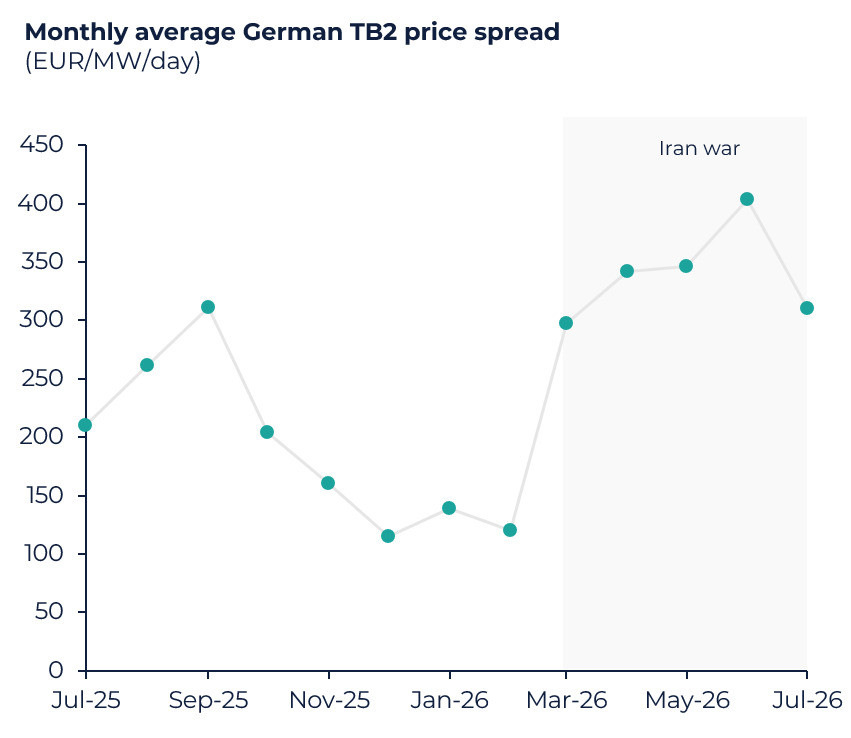
Battery storage has moved in the opposite direction. Higher gas prices widen the swings between cheap and expensive hours on the power market, and batteries make money precisely by buying low and selling high within a single day. That effect showed up clearly in July's pricing data. The going rate for long-term battery contracts in Germany climbed back above pre-conflict levels, and the market's confidence in short-term trading gains also strengthened, reversing a slump earlier in the year when calmer gas prices had squeezed those margins. (TF)